How to Get More ROI From Webinars: The Time-Saving Guide
Discover how to get more ROI from webinars with practical, repeatable tactics for planning, engaging audiences, and repurposing content.
The fastest way to get more ROI from your webinars is to stop treating them as one-time events. That webinar recording isn’t just a replay; it’s a content goldmine. The trick is to repurpose it into dozens of high-quality assets—video clips, blog posts, and social media graphics—to multiply its value for weeks, or even months.
The True Cost of a One-and-Done Webinar
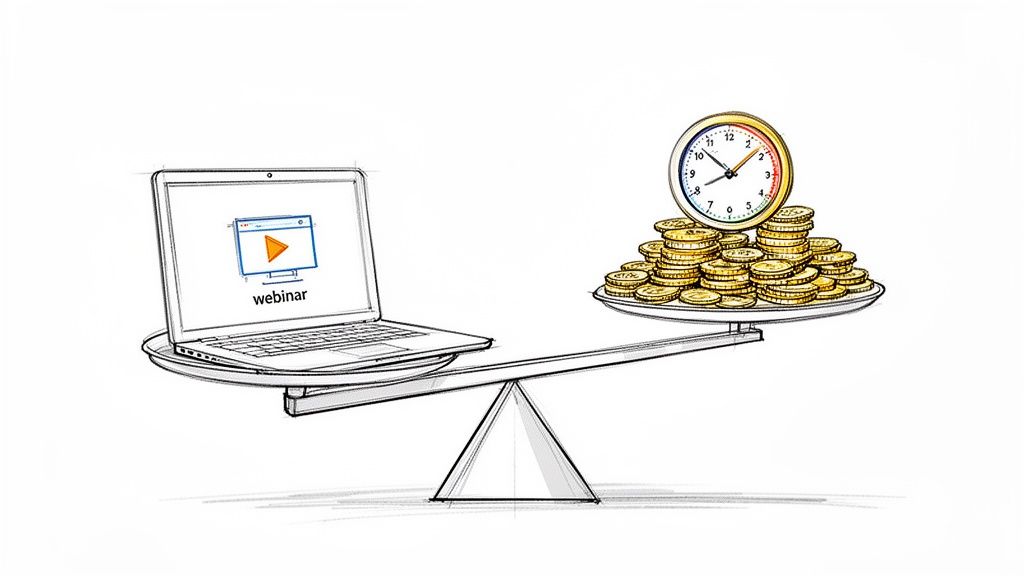 Let's be direct: webinars are expensive and time-consuming. You pour weeks into planning, wrangling speakers, creating slides, and promoting the event. And the spending doesn't stop there. Platform fees, ad spend, and design work can easily push the investment into thousands of US dollars before you even go live.
With that much on the line, the pressure to prove its worth is immense. But when a webinar only exists for a single hour, justifying that cost becomes a tough sell. The moment the live event ends, all that incredible momentum just… dies. The valuable insights you shared are now locked away in a recording that, being realistic, very few people will ever re-watch.
The Hidden Financial Drain
The biggest cost isn’t the money you spend; it’s the opportunity you lose. Treating a webinar as a disposable, one-off event is like printing a single copy of a brilliant book and then shredding the manuscript. You've created an incredibly valuable asset, but you're only cashing in on a tiny fraction of its potential return.
This "one-and-done" habit leads to painful outcomes every marketer knows too well:
- Sky-High Cost Per Lead: When you divide the total webinar cost by the handful of live attendees, the CPL can be genuinely alarming.
- Wasted Content Gold: An entire hour of expert discussion, great audience questions, and polished presentation content just vanishes from your marketing channels.
- The Content Treadmill: Your team is right back at square one, desperately brainstorming new ideas for the next campaign instead of building on the amazing work you have already done.
The real challenge isn't just the direct cost of producing a webinar. It's the silent, compounding loss of potential engagement, leads, and brand authority that happens every single day that recording sits gathering digital dust. This is where most marketing teams leave money on the table.
Shifting from an Event to an Asset
To truly figure out how to get more ROI from webinars, you have to change your mindset. A webinar isn't the finish line; it’s the starting block for a powerful content engine. That recording isn't just a replay for people who missed it; it's the raw material for dozens of high-performing marketing assets.
Imagine turning one 60-minute webinar into 30 days of content—all without the soul-crushing grind of hiring freelancers, juggling ten different software tools, or spending weeks in an editing suite. It's not just possible; it's simple. Platforms like RepurposeMyWebinar are built to do exactly this, transforming your recording into professional, on-brand assets in minutes. This strategy turns a significant one-time expense into a repeatable, scalable source of leads and engagement, completely changing the economics of your webinar programme.
Plan for Profit Before You Press Record
 A high-return webinar is won long before you ever go live. While a polished slide deck and a charismatic speaker are important, they can't salvage a strategy built on shaky foundations.
Honestly, the biggest mistake people make is chasing vanity metrics. Registration numbers feel great, but they often have little to do with actual revenue. To get real ROI from your webinars, every single decision must tie back to a clear financial outcome.
This means shifting your focus. Stop asking, "How many people signed up?" and start asking, "How many qualified leads did we generate?" or "What was the value of the pipeline this event influenced?" It’s a subtle but critical change in mindset that forces you to be deliberate about your audience, topic, and calls to action.
Defining Your Ideal Attendee
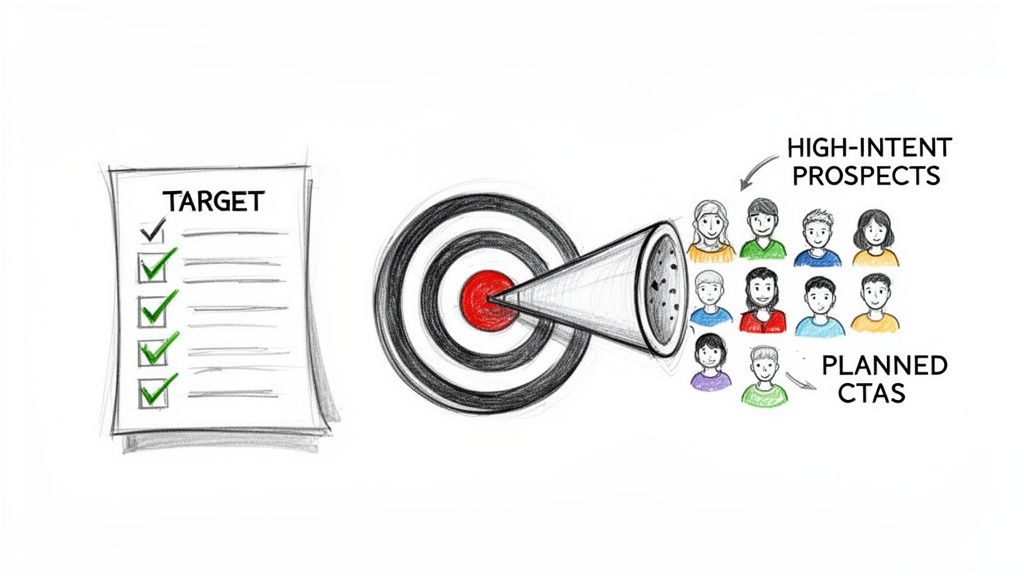
First things first: stop marketing to everyone. A profitable webinar targets a very specific audience with a very specific problem that your business solves. The goal isn't to get the most attendees; it’s to get the right ones.
These are the people with the authority and budget to buy, who are actively feeling the pain point your webinar promises to address. Before you even dream up a title, you need to define your Ideal Attendee Profile (IAP):
- Role and Title: Are they a Head of Marketing, a Senior DevOps Engineer, or a CFO? Get specific.
- Company Size: Are you targeting scrappy start-ups with 10-50 employees or enterprises with over 1,000?
- Primary Challenge: What’s the single biggest professional headache they're trying to solve right now?
- Buying Triggers: What would make them actively seek a solution like yours today?
This profile becomes your North Star. Every promotional email, every social media post, and every piece of content should speak directly to this person and their specific challenge. This focus naturally weeds out low-quality leads and attracts high-intent prospects who are far more likely to convert.
The most successful webinars feel less like a broad presentation and more like a focused consultation. When you define your audience with extreme clarity, you can craft content that resonates deeply and makes your solution feel like the obvious next step.
Structuring Content for Conversion, Not Just Clicks
With your IAP locked in, the next step is to choose a topic that educates rather than sells. This might sound counterintuitive, but educational webinars have become a game-changer for UK B2B marketers.
Research shows that educational sessions generate 53% more ROI than product demo webinars. When you consider the average cost per lead from webinars is around US $90, those efficiency gains from truly helpful content are impossible to ignore.
The key is to teach your audience how to solve a problem conceptually. This builds trust and authority, which organically positions your product as the best tool to execute that solution. The final call-to-action then feels like a helpful next step, not a jarring sales pitch.
Consider these tried-and-true content frameworks:
- The "Mistakes to Avoid" Framework: Address common errors your IAP makes and show them a better way forward.
- The "Step-by-Step Playbook" Framework: Provide a clear, actionable guide to achieving a specific outcome they desperately want.
- The "Industry Trends" Framework: Share unique data or insights that help your audience navigate their market more effectively.
Your webinar content marketing strategy should be built around providing genuine value. The sales element should be a light touch, focusing on how your solution simplifies or automates the process you've just taught them.
By planning for profit from the very beginning, you transform your webinar from a costly event into a predictable and powerful revenue-generating machine.
Turn Live Engagement into Sales Opportunities
An engaged audience is more than just a nice-to-have metric; it’s a direct signal of sales intent. The real magic happens when you stop passively hoping for the best and start actively engineering conversion moments during the live session itself.
This is about much more than just sticking a Q&A at the end. It's about building a structured experience that guides attendees from education straight to action. Your goal here is to pinpoint your most interested prospects, get a read on their biggest challenges, and give them a crystal-clear, compelling reason to take the next step with you.
Use Polls for Smart Segmentation
One of the quickest ways to take the temperature of your audience is with real-time polls. But please, don't waste them on fluffy questions like, "Where are you tuning in from?". Use them strategically to segment attendees based on their pain points, company size, or where they are in the buying journey.
For instance, a software company could ask:
- What’s your biggest project management headache right now?
- A) Team collaboration is a mess
- B) Timelines are slipping and budgets are blowing up
- C) I have zero visibility into project progress
The responses instantly tell your sales team who to follow up with and precisely what to talk about. Anyone who answers "B" is a prime candidate for a conversation about your platform's budget tracking features. That simple poll just turned a generic attendee list into a prioritised hot-lead list.
The best engagement tactics are the ones that give you data. When you use polls to segment your audience live, you’re arming your sales team with the exact context they need for a relevant, high-impact follow-up call.
Structure Your Q&A to Surface Objections
A well-run Q&A session isn’t a free-for-all; it’s a strategic intelligence-gathering mission. It's your single best opportunity to hear a prospect's biggest hurdles and objections, in their own words. Encourage specific, problem-focused questions throughout the webinar, not just in the last five minutes.
Have a moderator tag questions related to pricing, implementation, or specific features. These aren't just questions; they're buying signals. Answering them live not only helps that individual but also educates every other attendee who was thinking the same thing. This transforms your Q&A from a simple closing segment into a powerful tool for overcoming sales barriers at scale. Truly mastering this is how you leverage webinars for lead generation.
Craft Irresistible Mid-Webinar Offers
Waiting until the last 30 seconds to drop your main call-to-action (CTA) is a rookie mistake. By then, attention is dropping off, and people are already closing the tab. A much smarter approach is to embed compelling, low-friction CTAs throughout the presentation that tie directly into the content you’re sharing at that moment.
Here’s a simple script you can adapt:
"We've just covered how to solve [Problem X]. If you want to see exactly how our platform automates this in under five minutes, I've just dropped a link in the chat to book a private 15-minute demo. We only have 10 spots available this week for attendees."
This approach does three things brilliantly:
- It’s Relevant: The offer is a direct solution to the point you just made.
- It Creates Urgency: Limited spots encourage people to act now.
- It’s Low-Commitment: A "15-minute demo" feels way more approachable than a "sales call."
After the event, your sales team gets a clean list of attendees who literally raised their hands and self-identified as highly interested. For more on this, check out our full guide on what to do after hosting a webinar. By turning live engagement into a seamless handover, you stop leaving money on the table and start closing more deals.
Transform One Webinar into a 30-Day Content Engine
Your live webinar is over. The attendees have logged off, and the Q&A is done. But the most profitable phase is just beginning. The single biggest lever you can pull to dramatically boost webinar ROI is to treat that recording not as an archive, but as raw material for a full content campaign.
Let’s be honest: manually repurposing a webinar is a painful time sink. It means downloading a massive video file, scrubbing through it to find good soundbites, and then begging for time from designers, writers, and video editors. This slow, disjointed workflow is exactly why most webinar recordings end up gathering digital dust—it’s just too much work.
Now, imagine this instead: you upload your 60-minute recording and, in minutes, you have an entire campaign ready to go. We're talking about a full 30 days of high-quality marketing assets, generated almost instantly, without hiring freelancers or juggling multiple tools.
From One Hour to a Full Month of Marketing
The real magic happens when you "atomise" your webinar—breaking it down into smaller, purpose-built assets for different channels. This isn't just about saving time; it's about meeting your audience where they are with content that fits how they actually consume it. To truly squeeze every drop of value from your investment, you need to implement smart content repurposing strategies.
A single one-hour recording can be instantly turned into a stunning array of assets:
- 5-8 Short-Form Video Clips: Perfect for LinkedIn, these 30-90 second clips can highlight key stats, answer a common question, or share a powerful insight.
- 1 SEO-Optimised Blog Post: A 1,500-word article based on the webinar transcript can pull in organic traffic for months, if not years.
- 6-16 On-Brand Image Quotes: Pull out the most impactful lines and turn them into shareable graphics for Instagram, X, and Facebook.
- 1 Full Audiogram: An audio-only version of your webinar can be published as a podcast episode, reaching an entirely new audience.
- 1 Email Nurture Sequence: Use snippets and key takeaways to create a follow-up series for both attendees and the people who couldn't make it.
This flow shows how you can turn live interactions into sales opportunities, which can then be amplified through all those repurposed assets.
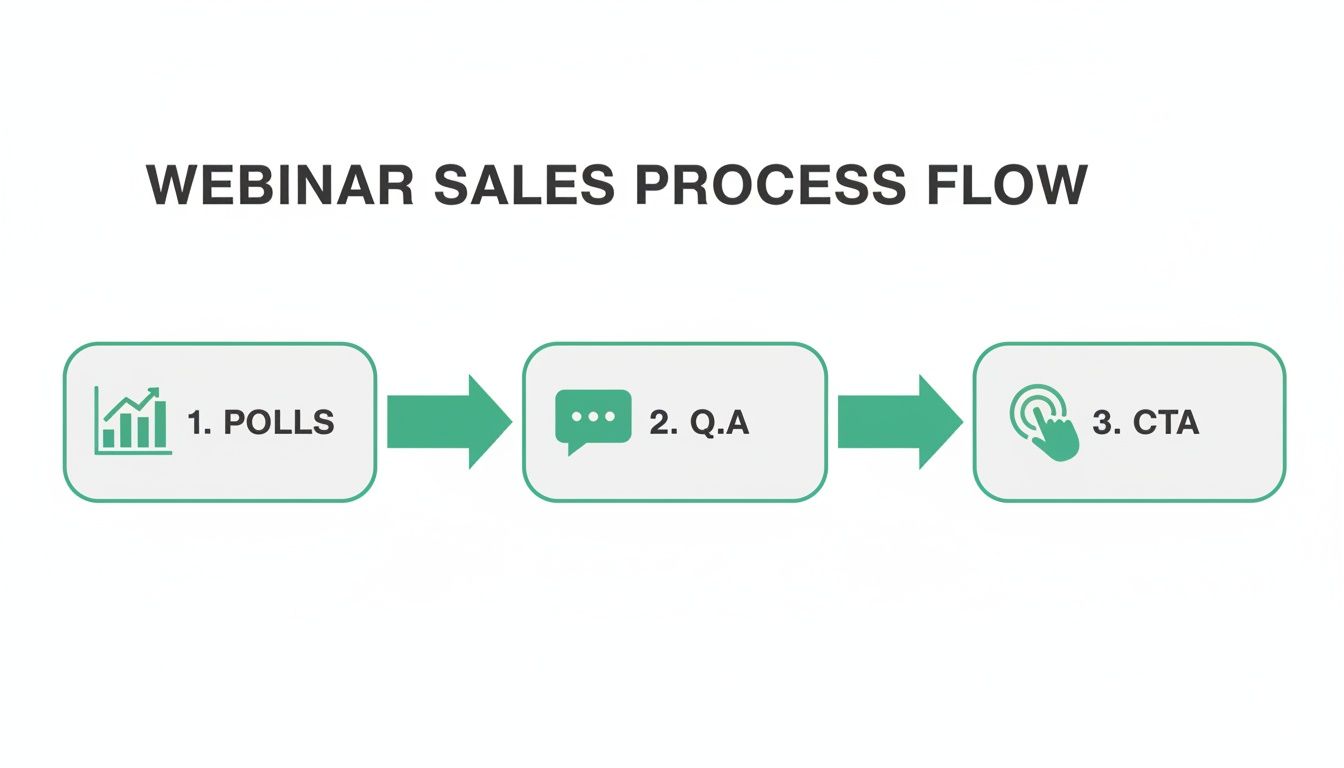
By systematically capturing insights from polls and Q&A, you create powerful content snippets that directly address your customers' biggest pain points.
The Real Cost of Doing It Manually
Creating this much content the old-fashioned way would set you back thousands of US dollars in freelance fees and eat up over 40 hours of your team’s time. With an automated solution like RepurposeMyWebinar, you eliminate the manual work, multiple tools, and hiring needs, getting professional results for a fraction of the cost, in a fraction of the time.
Content repurposing has become a massive ROI multiplier for UK B2B marketers. In fact, these strategies improve ROI by 32% on average, delivering a clear financial win. It's no surprise that UK marketing professionals see short-form video as the highest ROI content format at 27.5% effectiveness, followed by long-form video at 16.4%—both of which can be generated instantly from recordings.
The question is no longer if you should repurpose your webinars, but how you can do it efficiently at scale. The difference between a high-performing webinar programme and a costly one often comes down to the speed and quality of post-event content creation.
How RepurposeMyWebinar Makes It Happen
This is precisely the problem RepurposeMyWebinar was built to solve. It gets rid of the friction, the cost, and the delay. You simply upload your recording from Zoom, Google Meet, or anywhere else.
Our AI gets to work, automatically generating a full suite of assets:
- Accurate Transcripts: Clean, readable text that forms the foundation for blog posts and articles.
- AI-Identified Key Moments: The system intelligently flags the most compelling soundbites, saving you hours of review.
- Branded Video Clips: Short-form videos are automatically created with your logos, colours, and custom captions.
- Professional Image Quotes: Your best quotes are placed on on-brand templates, ready to post.
By swapping a messy, multi-tool process for a single, automated platform, you’re not just saving time—you’re creating a predictable system for maximising the value of every single webinar you host. Check out our deep dive into webinar repurposing best practices to learn more.
Stop letting your best content die after the live event. Transform your webinar archive into a powerful, lead-generating content engine.
Measure What Matters for Continuous Growth
Peter Drucker famously said, “If you can’t measure it, you can’t improve it.” It’s a bit of a cliché, but it holds true. All the planning and content repurposing in the world won’t mean much if you can't tie your efforts back to actual business results.
So, let's talk about the final piece of the webinar ROI puzzle: building a straightforward way to track what’s actually moving the needle. This isn't about getting lost in spreadsheets full of vanity metrics. It’s about zeroing in on a handful of key performance indicators (KPIs) that prove the financial value of your entire webinar programme.
Moving Beyond Basic Metrics
Most marketers stop at the basics: registration numbers, attendance rate, and maybe a "cost per lead." These are fine as a starting point, but they don't tell the full story. To understand the real return, you have to track the entire journey from prospect to paying customer.
This is especially true once you start repurposing your content. The ROI of your webinar isn’t just about the deals closed from live attendees. It’s also about the leads that came from that SEO-optimised blog post three months later, or the demo booked from a LinkedIn video clip six weeks after the event. Your measurement has to account for this long-tail impact.
Core KPIs for Total Webinar ROI
To get a complete picture of your programme's performance, you need to connect your marketing activities directly to revenue. Focus on these critical metrics to give you the data needed for smarter decisions.
- Lead-to-Customer Conversion Rate: What percentage of leads generated from the webinar eventually become paying customers? This is the ultimate measure of lead quality.
- Influenced Pipeline Revenue: How much potential revenue in your sales pipeline has been touched by your webinar or its repurposed assets? This shows the programme's impact on future sales.
- Asset Engagement Rate: Keep an eye on the views, likes, comments, and shares on your repurposed video clips, blog posts, and social graphics. This tells you which content formats are hitting the mark.
- Cost Per Acquisition (CPA): Calculate the total cost of the webinar (promotion, tech, repurposing) divided by the number of new customers acquired. This gives you a clear bottom-line figure for your investment.
Tracking these metrics completely changes the conversation with your leadership. Instead of saying, "We had 500 people attend," you can confidently state, "Our last webinar influenced over US $300,000 in sales pipeline and generated leads that converted at a 15% higher rate than our other channels."
A Simple Framework for A/B Testing
Real growth comes from constant testing. Don't just set up your follow-up emails and social posts and forget about them. Simple A/B tests can lead to major performance boosts over time.
You don’t need complex tools to get started. Just try these simple experiments:
- Email Subject Lines: Test a benefit-driven subject line (e.g., "Your Playbook for Cutting Project Costs") against a more direct one (e.g., "Webinar Replay Inside").
- Video Clip Headlines: On LinkedIn, test a question-based headline against a statement-based one for the same video clip.
- Call-to-Action (CTA) Wording: In your follow-up emails, try testing "Book a Demo" against "Schedule a 15-Minute Strategy Call."
Track the results and put more effort into what works. These small, incremental improvements compound over time, steadily increasing the ROI of every event you run.
The potential for financial return is enormous. The UK virtual events market is projected to hit £236.69 billion, with 74% of B2B event organisers in the UK reporting positive ROI within just six months. What’s more, 44% of UK marketers are achieving a 3:1 ROI or better from their event programmes. Discover more insights about UK event industry statistics to see what’s possible when you measure and optimise effectively.
By connecting your efforts to clear business outcomes, you can confidently prove the value of your webinar strategy, make a case for bigger budgets, and drive sustainable growth for your company.
Frequently Asked Questions
Got questions about webinar ROI and content repurposing? You're not alone. Here are a few of the most common ones I hear from B2B marketers, along with some practical, no-fluff answers.
How Quickly Can I See ROI from Repurposing Webinar Content?
You'll see an immediate return on your time and budget. Manually creating a month's worth of assets from a webinar can easily eat up 40+ hours and cost thousands of US dollars in freelance fees.
Platforms like RepurposeMyWebinar generate all those assets in minutes for a tiny fraction of the cost, eliminating the manual work and need for multiple tools or hires. That’s an instant ROI on your time.
As for engagement ROI—like a bump in social reach or traffic to a new blog post—you can see that within the first week of publishing. The lead generation ROI follows, as those repurposed assets start pulling in and nurturing new prospects. You can usually start measuring the influenced pipeline revenue within the first quarter.
Can I Repurpose Very Technical or Niche Webinars Effectively?
Absolutely. In fact, technical webinars are a repurposing goldmine because they're packed with high-value, specific information that your ideal audience is actively searching for. The trick is to pull out that value and repackage it for different channels.
For example, you could:
- Pull key data points and stats to create compelling, shareable quote graphics for social media.
- Break down complex ideas into short, educational video clips. A 60-second explainer on a tricky topic is pure gold for LinkedIn.
- Use the detailed transcript as the foundation for an in-depth, SEO-rich blog post or technical guide. This will attract a highly qualified audience looking for specific solutions.
The key is using a tool that can accurately transcribe technical jargon. RepurposeMyWebinar lets you pinpoint the most valuable nuggets and get them in front of a wider audience, extending the life of your niche expertise.
Don't mistake a niche topic for limited appeal. Your technical content is evergreen and incredibly valuable. Repurposing just makes that value more discoverable to the right people over a much longer period.
What Is the Single Biggest Webinar Mistake Companies Make?
Easy. Treating the webinar as a one-and-done event. I see it all the time: companies pour huge amounts of time and money into planning and running a 60-minute live session, only to let the recording gather digital dust.
This "one-and-done" approach leaves up to 90% of your content's potential value on the table.
The smartest marketers see the live webinar as just the starting point. They treat that recording as raw material for weeks, even months, of high-quality marketing content that drives leads and engagement long after the live event is over. If you're not repurposing, you're not getting the full return on your initial investment.
Do I Need a Huge Live Audience to Get Good ROI?
Not at all. A massive live audience is a vanity metric. A smaller, highly engaged group of your ideal customers is far more valuable than a huge, passive audience filled with low-intent leads.
The real magic of webinar ROI happens after the live show.
Your on-demand recording and all the assets you create from it will likely be seen by 10x or even 100x more people than attended live. The goal isn't just a big live turnout; it's creating high-quality, evergreen educational content. That value is the same whether 50 or 5,000 people showed up on the day. Your repurposed assets ensure your message reaches the right people over time, regardless of the initial attendance numbers.
Ready to stop leaving money on the table and turn your webinars into a powerful content engine? With RepurposeMyWebinar, you can transform one 60-minute recording into 30 days of on-brand content in minutes. Ditch the manual grind, stop juggling a dozen different tools, and start multiplying your webinar ROI today.